
My Diagnosis of HSD and the Impact of Being a Screen Printer
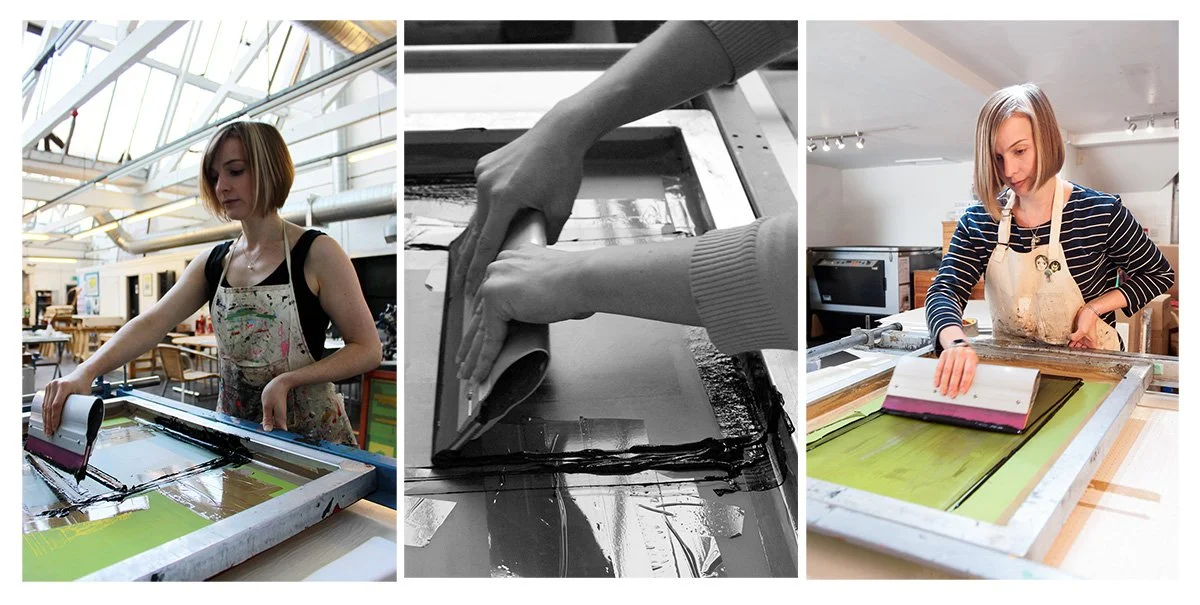
So without trying to sound like I’m moaning, here we go! If you’ve been following me a while you may have noticed a few years back there was a time where I stopped making prints, posting on social media, and stocking shops…this was when I found out I had Hypermobility Spectrum Disorder (HSD). It’s going back about 9 years ago, which seems crazy as I still don’t think I’ve really got a grip of it, I’m literally typing just after going to physio because I printed too much over the last few weeks.
I started writing this back in May, which was Ehlers-Danlos Syndrome (EDS) and HSD awareness month, but found it difficult to get the balance of not wanting to sound like it’s the worst thing, because at least for me it definitely isn’t and there are people who are going through so much more, but on the other hand it may be useful to someone in a similar position and I hope my journey might help anyone with a joint isssue or a joint condition.
I’ve talked a bit about my diagnosis of HSD on social media over the years, to help raise awareness of these conditions, but never really gone into the details, so I thought now might be a good time to reflect on how this has affected my life, especially working as a screen printer…which is not the best choice of career if you do have this type of condition.
So first the basics, a quick introduction to EDS and HSD, as they are still pretty unknown conditions, even with celebrities such as Billie Eilish, Lena Dunham, and Jameela Jamil, speaking out more about their diagnosis. These are genetic conditions that effect the body’s connective tissue, so although it’s often associated with people being “bendy”, this tissue is found throughout the body. There are various types, people can be affected very differently, and symptoms can drastically differ in severity. Both can cause a mutation in collagen, making it more fragile and stretchy, resulting in the over flexibility of joints, which is known as being hypermobile, and stretchiness of the skin, and sufferers can have a much younger appearance…so there’s one positive!
Seeing that written down it doesn’t really sound too bad, but there are a broad range of symptoms that are less visible, such as pain, fatigue, palpitations, digestive issues, anxiety and even neuro-divergency, which is only a few of the issues. As symptoms are treated separately, the dots that lead to EDS and HSD are often left unconnected leaving the underlying cause to be ignored, and it is still very difficult to get a diagnosis. That’s nothing against our wonderful NHS it’s more that doctors are taught to look for the obvious answers, there’s a medical phrase, "When you hear hoofs, think horses, not zebras.", which is why people with EDS are sometimes referred to as “Zebras” being the exception to the norm. Often people suffer for years without diagnosis, so my own experience is quite different.
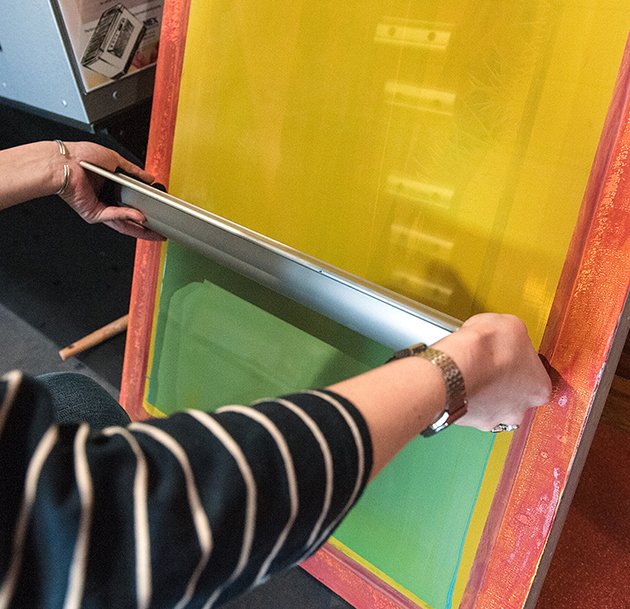
After my diagnosis I started to notice my wrists and finger positions in photos like this.
That’s the technical stuff out the way, so back to my experience…
In 2016 I’d just moved to my lovely new studio in Rawdon, I sourced all my screen printing equipment, it was a big financial commitment but I was looking forward to being more productive so I could make life as an artist be more sustainable. I’d recently moved to Kirkstall to live with my partner, in a traditional Leeds back to back. I was working hard, screen printing itself is extremely physical, but I could print all day with no issues, and on reflection I was probably pushing myself a little too hard, feeling the need to justify the studio and become financially stable.
Then one day I woke up, got out of bed, my whole body felt stiff and I struggled to get down our two flights of steep stairs. I assumed this would just go away on it’s own, but it just got increasingly worse, until the point my movement became robotic and painful. Through the day it would ease, and although I didn’t really understand what was going on, I just dismissed it.
It didn’t go away though, instead the fatigue started. I never really understood fatigue until I had it, it’s often dismissed as tiredness but it goes beyond that. If you haven’t experienced it, it’s not something that’s just fixed with more sleep. Apparently, this is your body using extra energy to compensate for other issues, such as managing pain and stabilising joints. Being self-employed multiple sick days were out of the question, so I persisted in going into the studio every day, but I’d arrive incapable of doing anything. I couldn’t focus, possibly brain fog, I just sat down on the floor, leant against the radiator and worried about approaching deadlines, events, money, rent, and felt quite helpless.
My wrists were in pain, then my ankle began to swell up, to the point I couldn’t ignore the symptoms any longer. My GP referred me to Rheumatology, and thankfully I didn’t have a long wait. They had two options to explore, Psoriatic Arthritis (linked to psoriasis) which they could test for, or Hypermobility Spectrum Disorder, as they identified that I was hypermobile in several joints (but not the ones tested for EDS). The ultra-sound on my joints showed I was clear of the arthritis, so by default I was officially diagnosed with HSD. I potentially have EDS, but it’s much harder to get a diagnosis due to having to meet a strict criteria.
There’s no treatment as such for HSD or EDS, but you can treat the symptoms. As I began to learn more about the condition it explained other issues I had in the past, such as dislocations and locking in my knees, needing orthopaedic insoles, and being called flexible by physios. I’m not as flexible as some people with the conditions, I can’t touch my toes, do the splits or do “tricks” like those who are often called “double-jointed”.
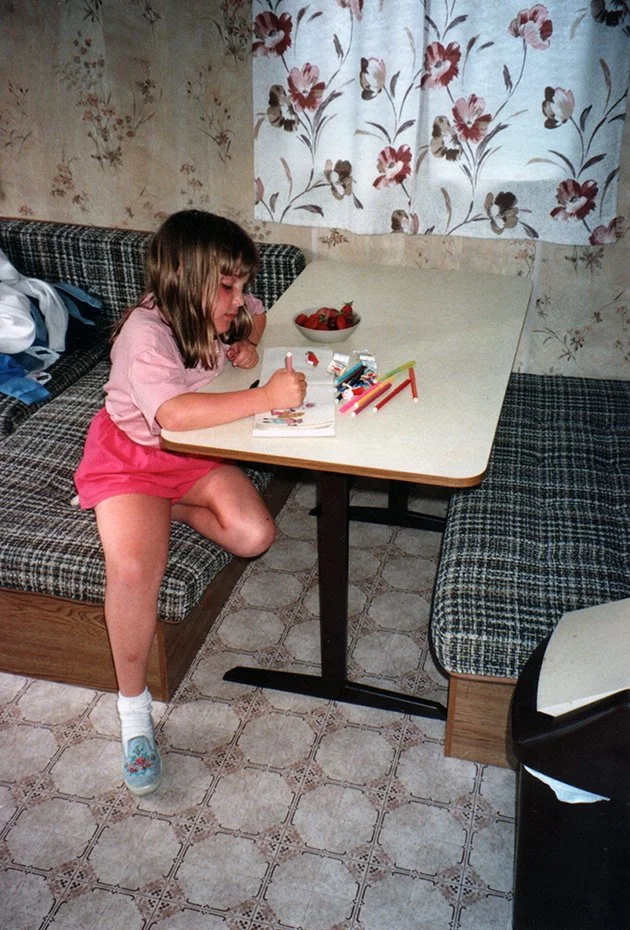
I’d often sit with my legs tucked under me, until they began to lock in position in my teens.
Time passed and luckily my symptoms started to subside on their own, unfortunately this initial flare-up had already greatly impacted my strength, I went from feeling like I was a stronger than average person, to struggling with basic tasks, like carrying shopping or opening a jar. This had a big effect on my screen printing, as I was unable to get a consistent pressure on my squeegee, I either pressed too lightly so not getting full coverage, or I over compensated by pressing too hard causing the ink to bleed and my wrists to hurt. I dealt with this as best I could, only printing small things and only a few at a time, even so the fatigue would come, along with back pain, I just couldn’t see how I could continue to be a printmaker anymore.
Although not an ideal situation for someone with a physical job, I wanted to really understand the condition more and avoid another flare-up so I found a local support group. After attending the meet-up it became very evident to me that I was fortunate, with a fairly minor version of HSD. Some people struggled to walk requiring mobility aids, wore finger splints and suffered with severe pain on a regular basis. I felt bad to have been so down about not been able to work when people were struggling so much with daily life. So I tried not to complain or talk about it too much, but this probably wasn’t the healthiest approach either, I now understand I can allow myself to be frustrated but the most important thing was I needed to learn to manage it.
After I started to feel better I wasn’t ready to give up my practice, but then I was hit with some other physical health issues which were misdiagnosed as anxiety for two years, and I would struggle to leave the house. It was only after some of my own research I made the link with HSD, but the time it had taken ironically, had taken its toll on my mental health.
I muddled along during this time, but as well as struggling socially I wasn’t doing a good job of running a business. Obviously my productivity had gone way down, but had also been terrible at communication with shops and supplying them with stock. I had to take some action if was to try to prolong being a screen printer.
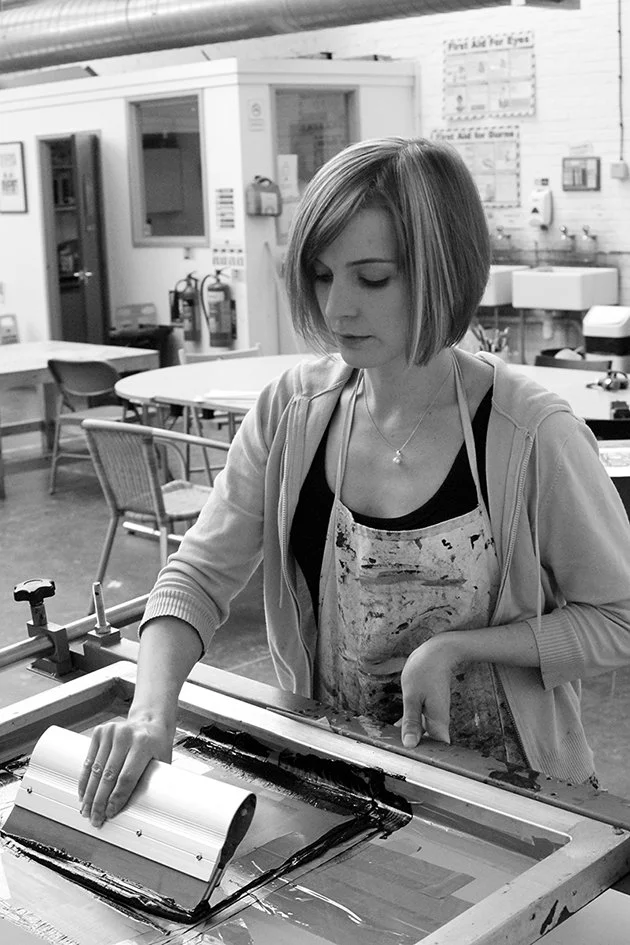
My profile image for many years, I hadn’t even noticed the bend in my wrist.
There’s a photo I used to use as my work profile image (above), and it was only after my diagnosis I saw that my wrist was at a right angle and realised I was probably doing this 100s of times a day in a printing session. The Occupational Therapists at the hospital gave me some wrist splints, initially as I could no longer sleep without getting pain. I got a second pair of splints fitted at a different angle to print in, although I was advised later that this wasn’t the right thing to do as you want to allow some movement to increase muscle strength. I now print in some bespoke made gloves that support and stop me over moving my wrists too much.
I went to West Yorkshire Print Workshop to learn to use the printing arm, to take away some of the pressure on my wrists, although admittedly I still haven’t made the move…I really should! I also learned some useful tips, such as to only print in the middle of the screen as less pressure is required, every time I see people printing up to the edges of a screen this I think about the extra effort that’s needed, so if that’s you get some bigger screens and save those wrists.
I was also very aware of not being able to print all day, so I print a little at a time, the downside of this is that I would always have work unfinished and ink that would sometimes go off before I’d used it. Big prints were a no go for quite some time as they require more pressure and I just didn’t have the strength. For a while I figured out a strange way to print to increase my pressure, but this was still hard to be consistent with although it did its job. I’m happy to say I am back to printing normally again.
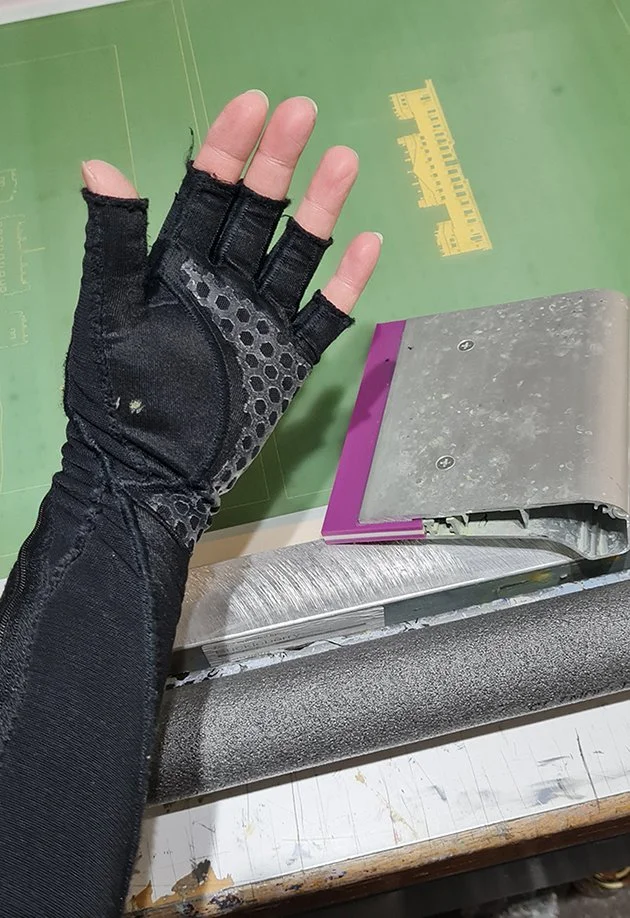
My printing aids: my gloves (or gauntlets), squeegee handle, and pipe insulation.
I invested in some different squeegee handles to see if this would help my grip, some worked better than others but I became a fan of ones with a wider grip, that also put more force on the squeegee blade due to its design. I also added a bit of pipe insulation to my print bed to take off some of the pressure from my fingers that would become sore.
Over time things seemed to get better, but at the back of my mind is always what might happen if I get another flare-up. I almost took this to the extreme by doing too little, the exact opposite of what is recommended. The over flexibility can be managed with increasing your muscle strength to stabilise the joints, strengthening activities such as Pilates are good (with someone who understands the condition). For me the only problem with this is having the energy levels to exercise, as well as having the energy to print, so it’s a bit of a juggling act.
I was recently talking to my partner about this, we described it as having an energy bar like on a video game, if you use to too much energy too soon you’ll have nothing left to finish the level. Often the idea of spoons is used (I don’t know why spoons) but each day you have a finite amount of spoons, and everything you do uses a certain amount of energy/spoons, if you use up your allocation for the day you can some take them from the following day, but that means you will have less energy to use tomorrow. I don’t really think about this too much now, but I understand if I have a very active day I will need to schedule a rest day, after a fair for example, if I don’t give myself time to recover it will take longer to get back to a “normal” level of energy and I risk burnout, and another flare-up.
Through all this I have learnt to slow down, put less pressure on myself, and be more forgiven if I can’t physically make a deadline. I try to take days as they come, and appreciate the importance of being kinder to myself and my physical and mental health. It’s made me more aware of many other makers around me who suffer from invisible illnesses, there’s more than you think, and being in awe of how strong they are to keep everything together and manage self-employment. I still have a long way to go and I still worry about what I will be able to do in the future but do my best to be thankful that I have been able to continue doing the job I love, be it a little slower.
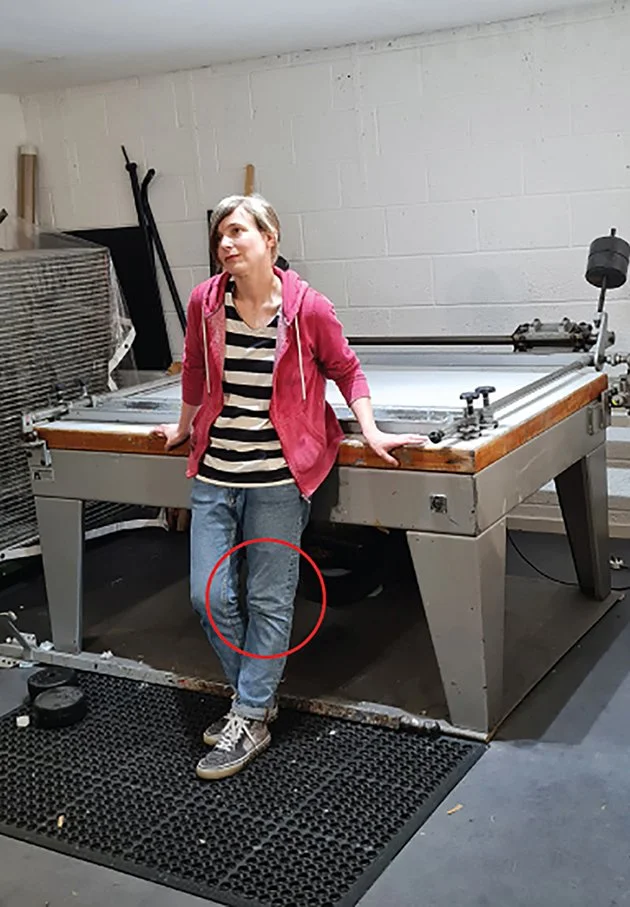
Hypermobility in my knees, I had to take more photos after I saw this.