
How I found my Studios, and Created a Screen Printing Workshop
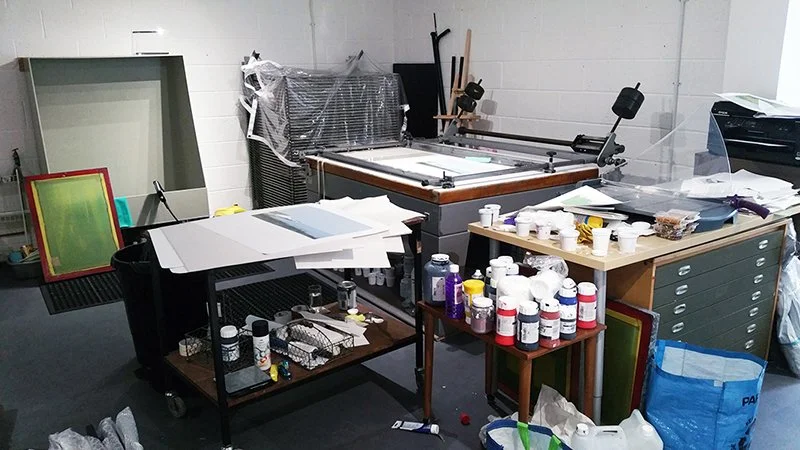
As I’m celebrating my 10th year in my Rawdon studio, I thought I’d look back at three spaces I’ve worked in, how I found them, and what I did to get them set up.
Just want to say quickly, that because my work is detailed I do need all this big equipment, but that’s not for everyone and it is totally possible to do it with a lot less.
Starting somewhere Temporary
Way back in 2012 I had just started to think about selling my work, I’d got some funding through the New Enterprise Allowance (unfortunately this stopped in 2022). I was living at Mum’s house, she was about to retire, so to avoid getting under her feet I found a temporary and super cheap studio through a Bradford arts charity I’d been volunteering with.
So with that i moved into a 1980s office block in the middle of Bradford city centre, and I bagged a big space which I thought I could grow into. It was a little eerie , there were only three of us on our floor with about a dozen rooms, and the other 6 floors were pretty much empty.
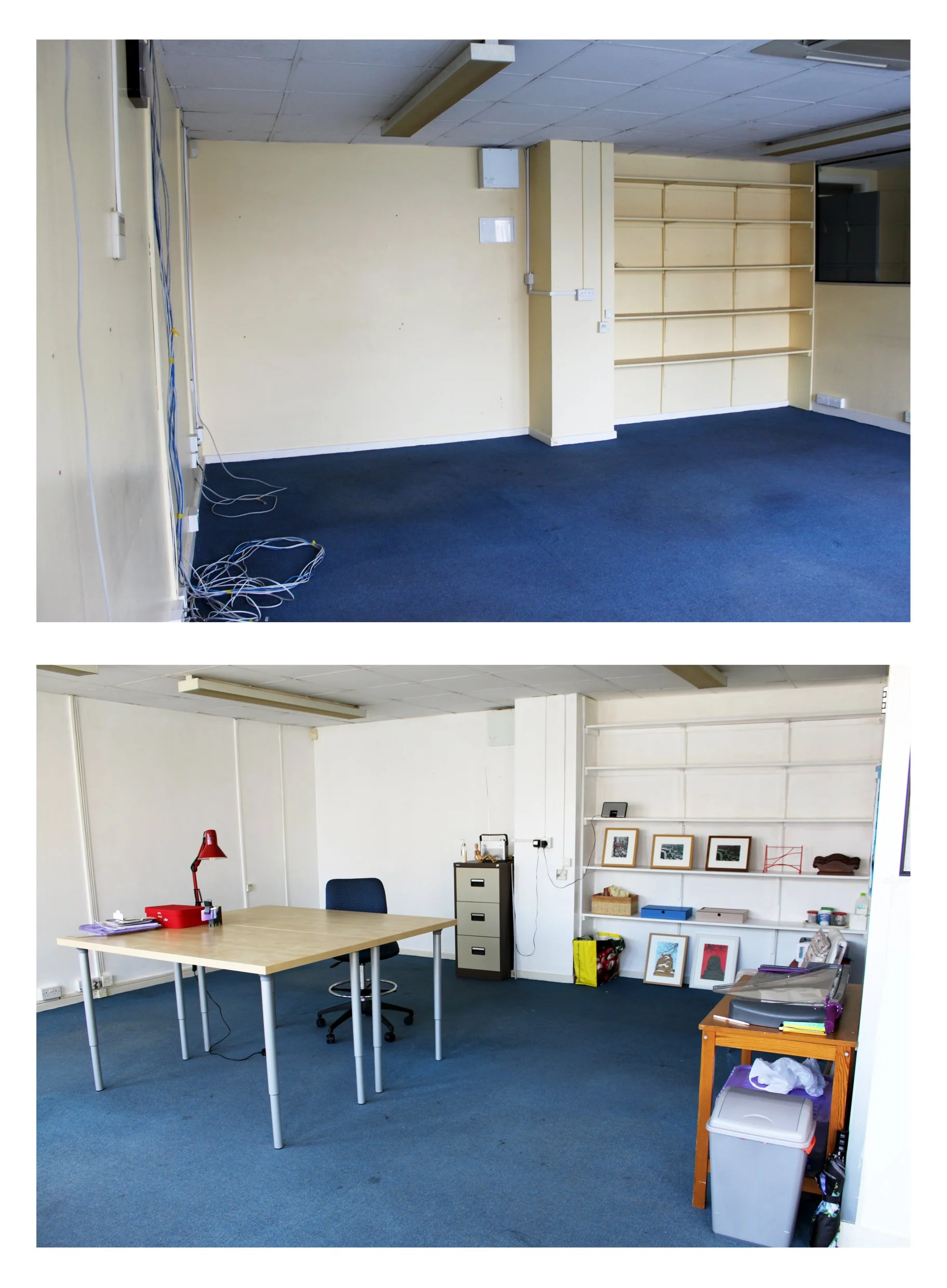
The before and after of my first studio
I invested in a few select items, my A2 guillotine, an A3 printer scanner, some Ikea tables, and obviously the obligatory kettle. I picked up a chair and filing cabinet from a second hand office shop, the rest was scavenged; my mum’s old work drawers, the people across the road were moving abroad and had thrown out a bin and drawing board, and I still use all these today too… I did give the bin a very good clean!
Me and a friend spent days painting the yellowed walls white, and pretty much as soon as it was done I was given my notice… I’ve never painted a space since! The building had been sold and we had to move out quickly, that’s part of the deal with temporary spaces and the trade-off for ridiculously cheap rent, which was probably £50 a month.
It’s not something I can do now with all my stuff, but temporary spaces are a good option, there are some amazing studios via this route. If it’s something you want to check out I’d recommend speaking to Skippko and East Street Arts.
During this time I was using the screen printing facilitates at Inc Workshop in Leeds, which unfortunately no longer exists but locally we do have Leeds Print Workshop and West Yorkshire Print Workshop, in Mirfield near Huddersfield.
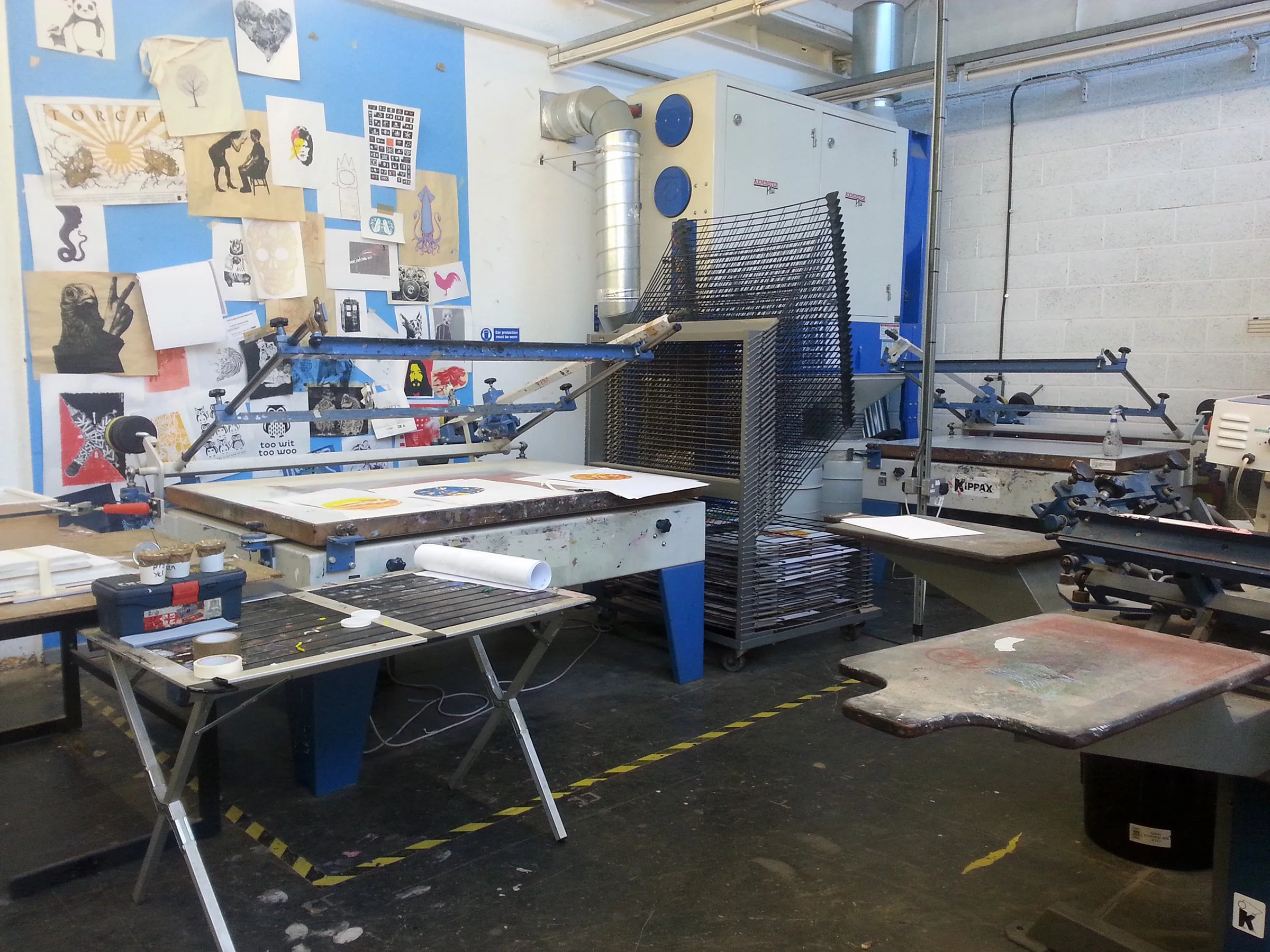
Inc Workshop where I used to screen print, my favourite print bed was the one on the right
The Room Above
I didn’t really know what to do next, back then there wasn’t much studio space in Bradford, so in a bit of a panic I rang an estate agent to just get an idea if I could afford anything. Fortunately the one estate agent I rang, Aidan, had a space in his building, so I arranged to see it.
To get to the room you had to go through the estate agent, up a steep narrow staircase, to a room looking out over Fox’s Corner. It was only about 3m x 3m, but as I wasn’t going to be printing here it was a lovely space, and best of all, no contract!. The rent was about three times the previous space, but it was more secure and I could walk there.
I stayed here for 4 years, adding and filling every inch of space I could; shelves to fill the alcoves, and a bargain £25 plan chest (from Bradford College recycle scheme). Aidan let me use the other room for my frames, and never once did my rent go up, which was unexpected from an estate agent.
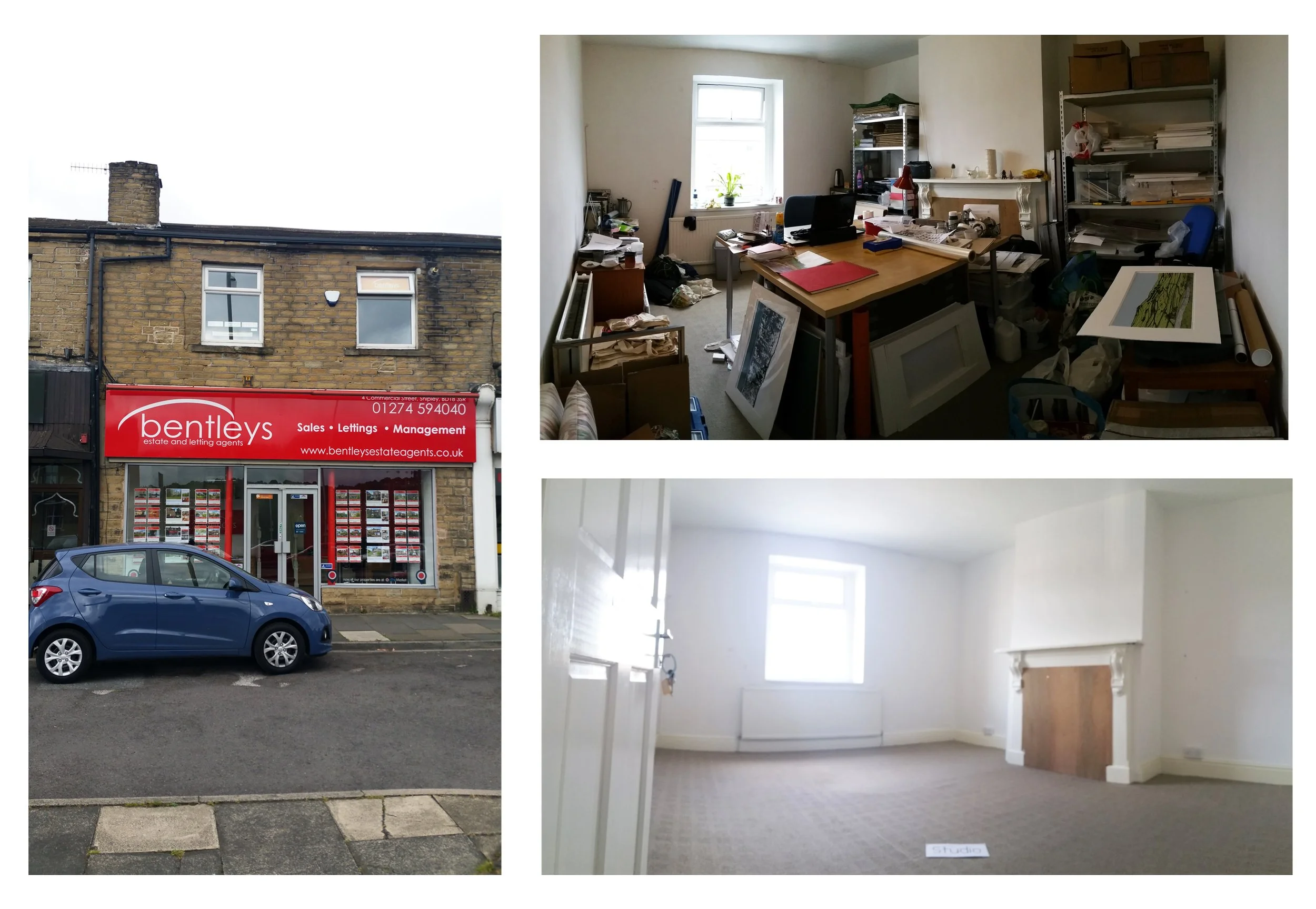
At the estate agents, my room was the top left window. This was the studio full to the brim, and how it looked when I left
Since finding that space I’ve advised a few makers to look up at shops and see if they look used, and a couple of people I know have found studios that way. Many businesses have rooms they don’t utilise because of the access, and would love another income, so always ask around if you’re struggling to find something suitable.
So after the 4 years Aidan decided to move buildings and I’d been meaning to move in with my partner in Kirkstall, so it was time to move on.
Finding a Workshop
Next I wanted a space to print from, but with that comes additional complications. I would need somewhere that would hold big pieces of equipment, daylight for drawing and mixing colours, but also a darker area for exposing screens. I also needed to be able to plumb in a pressure washer and washout booth, somewhere I could be loud and also concentrate.
Options were very limited, I only looked at two places, and I was ready to take the first which was in an old mill building…but there was a better space that was out of my price range. With the hope of negotiation I got in contact with them, it was in Rawdon, it was big but cold and damp so not suitable for paper.
The landlady, Jill, had a curveball though, she showed us around another space she wasn’t advertising. It was on the first floor, but had its own access and parking (the building is on a hill). It was still big, but bright and dry, but there was a problem…someone else had also said they wanted it!
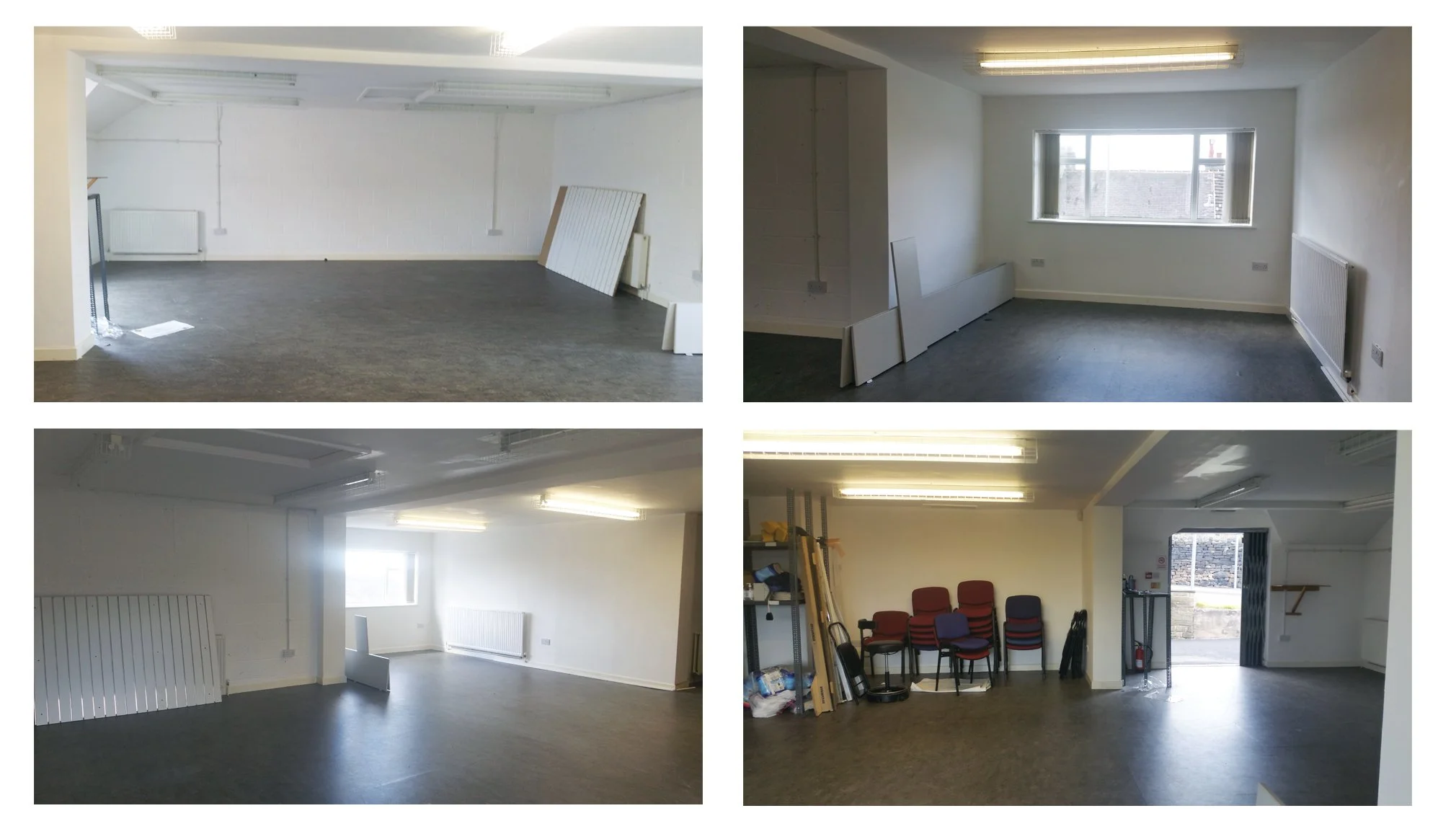
How my Rawdon studio looked when I looked around for the first time
It came down to Jill to select who she thought was more suitable and I was very lucky that she selected me. Then a small problem, I had to move in a few weeks and the space wasn’t ready, but I managed to move into a temporary space in the building whilst work finished on the studio.
This place was double the price of the previous, required a deposit and was the first space I had to sign a contract for. Luckily Aidan was happy to quickly read over the contract, which was great because he did get me to amend some things.
Sourcing a Studio
Now to get set up, having never set up a print studio before!
I was keeping an eye out online when an auction at Harrogate College came up, they were downsizing so had screen printing equipment available. I went to the viewing at the college but I was clueless. We toured the building and when we came to the art room I saw the print bed plug had been removed, so all I could do was have a walk around and lift the top up and down, and that was it, inspection done.
As I was leaving I spotted some plan chests and drawers were being piled up, I found out they were heading to landfill. Other scavengers had started to gather, so I quickly picked one and asked the workers if they would keep it for me for a few days, until the auction had finished, they agreed, and that’s how I got a free plan chest.
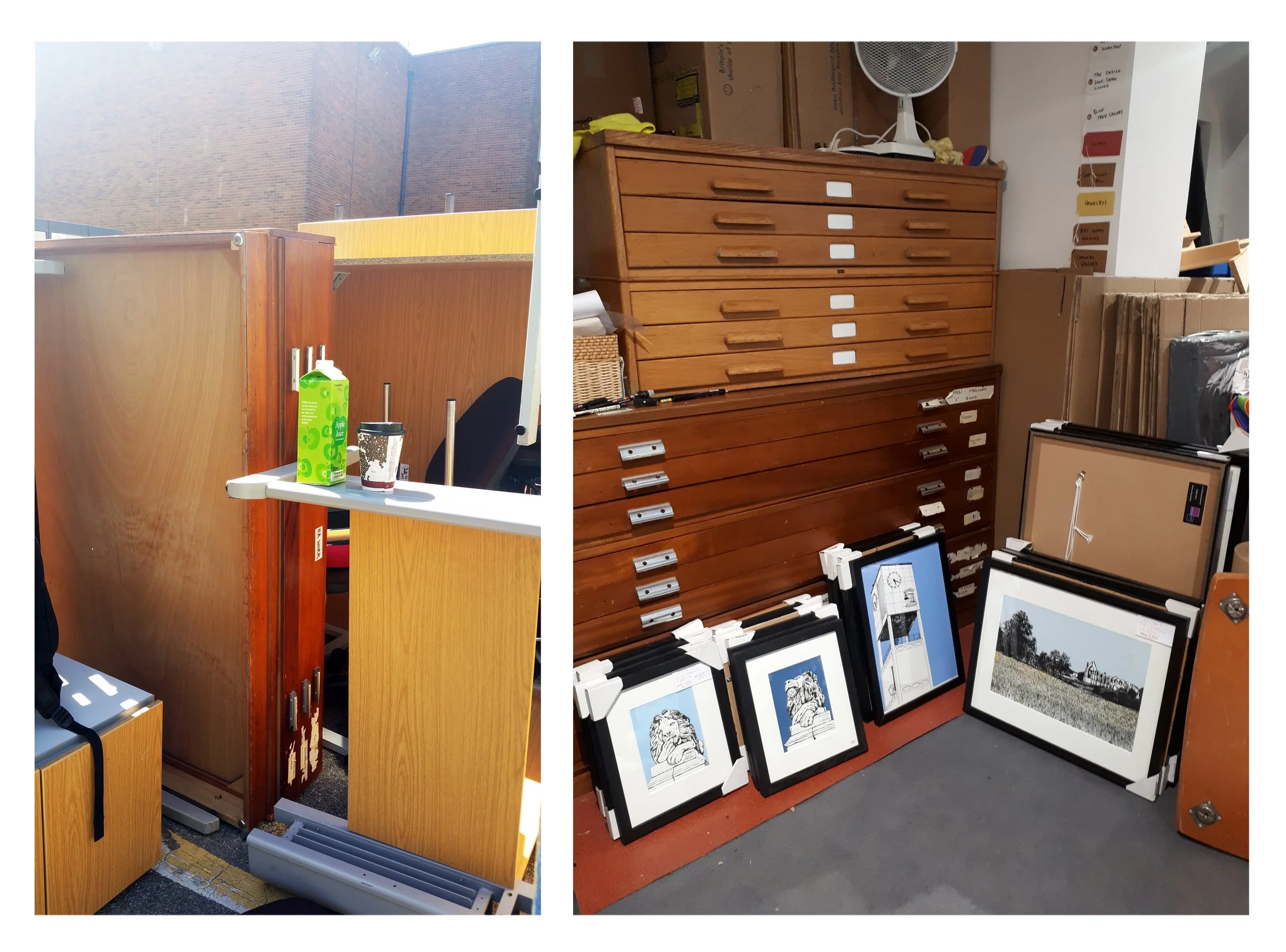
Finding my plan chest and in situ
On auction day I won the print bed, there was no interest in an A1 drying rack so I bought that too. That was it, one A1 Kippax print bed from 1978, plus a drying rack for about £300, an absolute bargain. Now just to get them to Rawdon, but then no one was willing to move such big heavy equipment without it being dismantled, which I couldn’t do. I was given a random number by the place I’d bought my filing cabinet from (I had hoped they could help) and they agreed to do the job.
When the guys turned up I was pretty concerned they’d turned up in an empty people carrier, this stuff is big and extremely heavy, this wasn’t going to happen! They dismantled the print bed whilst I worked on the print rack but I needn’t have worried as they got everything, including the plan chest, done in only two trips. How it didn’t ruin their car I will never understand, I was so impressed I got them back to move my studio.
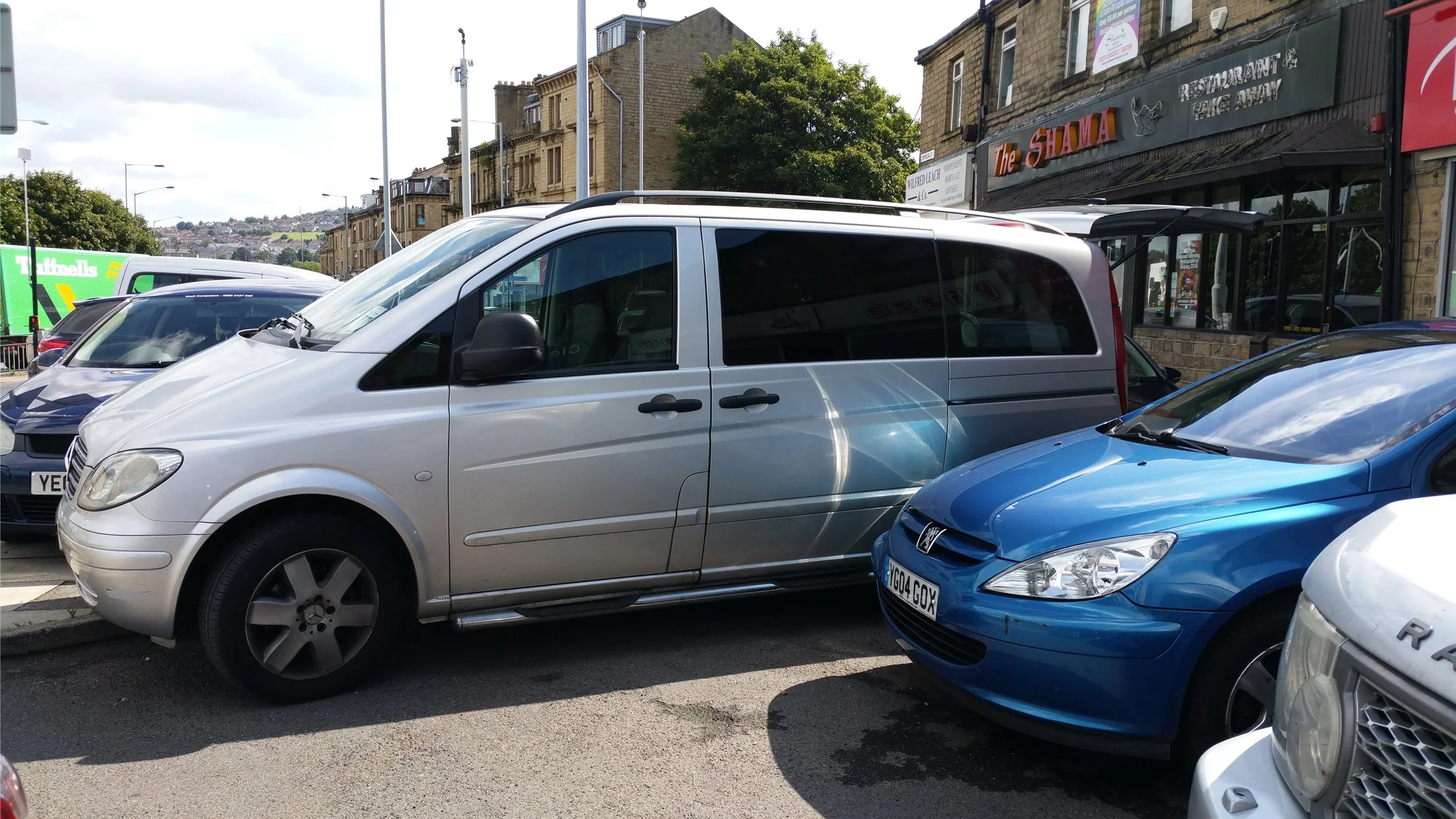
The people carrier
I designed and commissioned a basic washout booth, as I hadn’t seen anything a suitable size. I was aware of all the heavy stuff in my first floor studio, and even though I avoid plastic it felt the right way to go. My design created as little plastic waste as possible and was made by Leeds Plastics for about £300. The builder was still on site so he plumbed it straight in for me, adding a tap for my pressure washer.
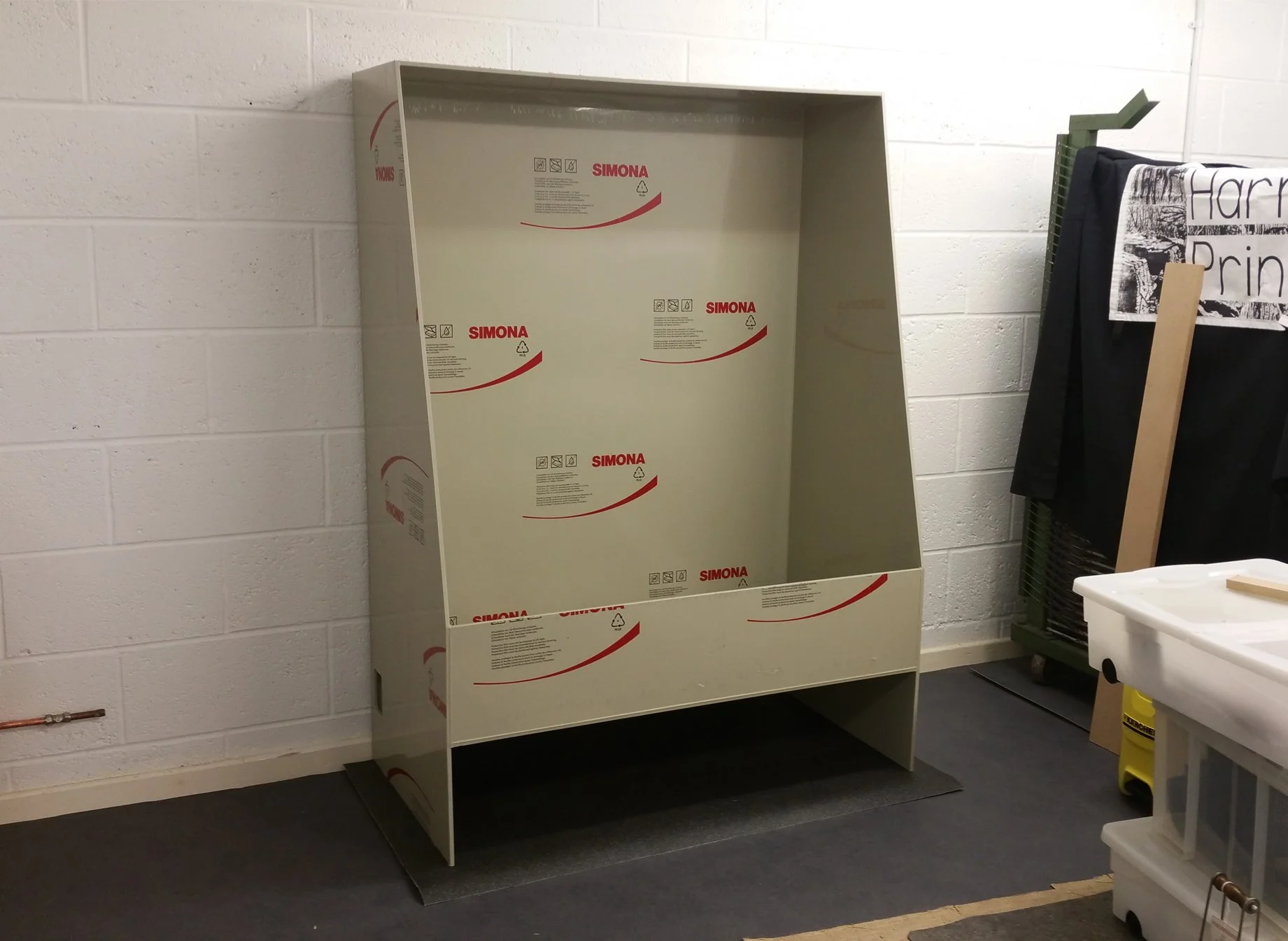
The arrival of my washout booth
The only thing I was missing now was an exposure unit, but this proved tricky. I had been advised I needed a one light source model to keep the high level of detail of my work. The small units are always more expensive as no one has space for the massive ones, so they’re always cheaper. I eventually found one via Screen Printing World who also check over second hand equipment. It was expensive at £2000, but it was the right piece of kit, and with that the studio was fully functional.
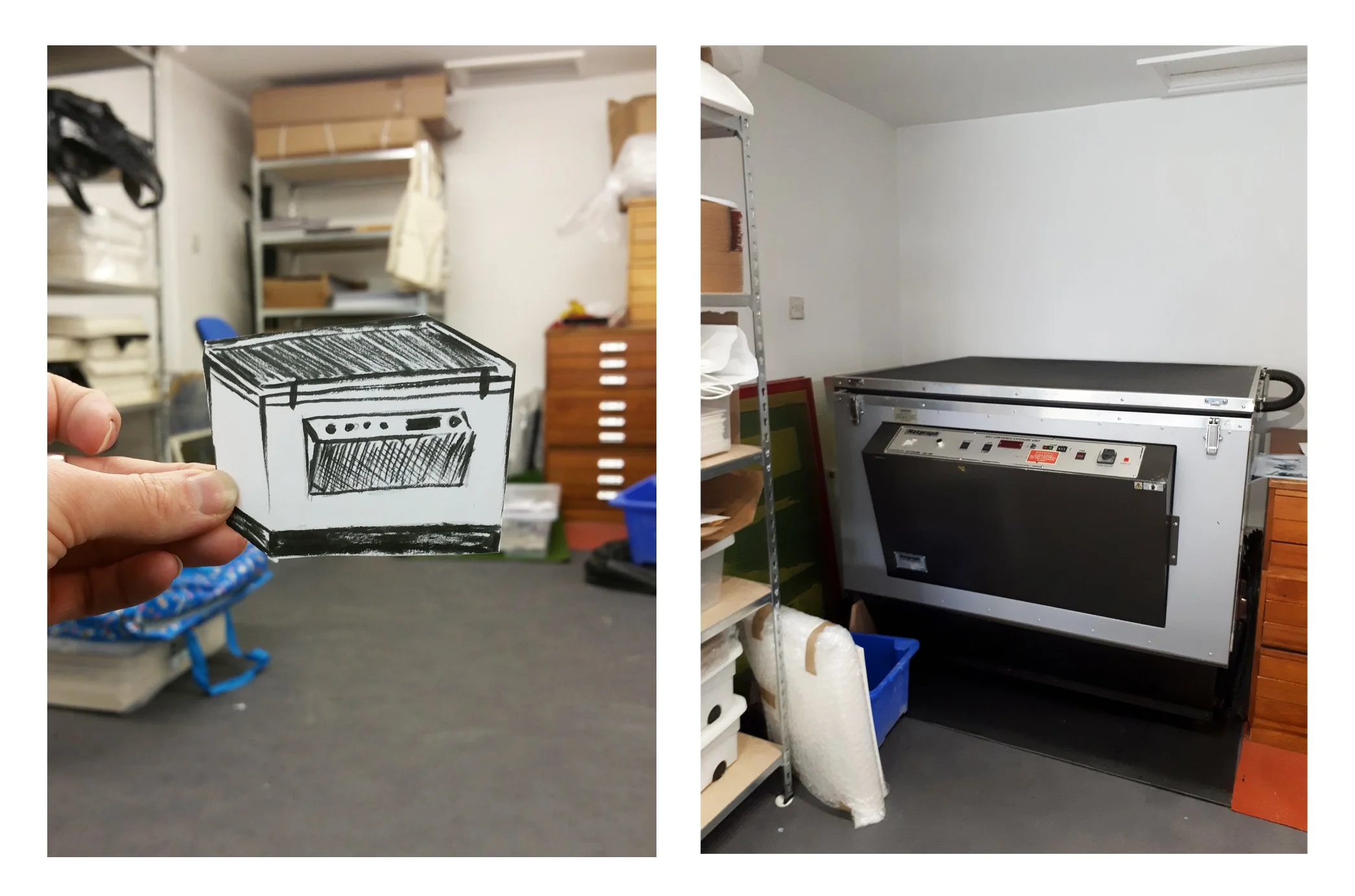
Manifesting my exposure unit on the left, and the one I bought on the right,
The Development of a Studio
Then for 8 years I just kept everything pretty much the same. During covid with the business grants I decided to invest in some shelving for my screens and frames. I designed them and commissioned Bare Joinery who created these perfect plywood shelves that fit together but can be configured indifferent ways if I move to a different space in the future. (Picture coming soon)
The big change was having to replace my print bed, it was losing accuracy which meant I was having a really low success rate in my final prints. The next print bed was also second hand and came directly from H G Kippax, the equipment every screen printer wants, made right here in Yorkshire, Huddersfield to be exact. They ship all over the world and are still run by the same family that set it up. My “new” machine was from 2016 and cost me about £3500, it’s taken a little while to get used to but it does a good job.
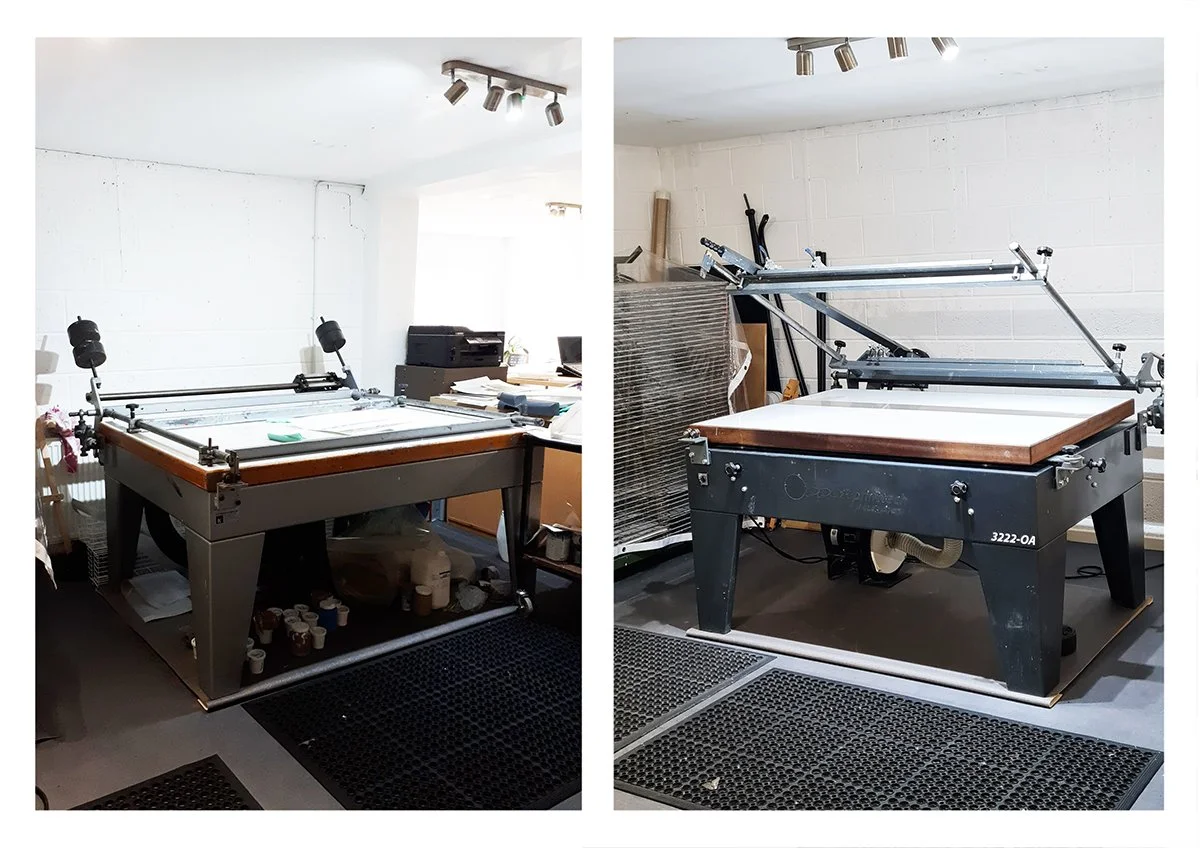
Left: my first Kippax print bed from 1978; Right: My replacement made in 2016
Making a Gallery and Teaching Space
I always thought the studio would be perfect for running workshops, but with my HSD (see previous blog) that just never became a thing. The space was never really set up to welcome people in, it was full of storage, there wasn’t any of my own work on the wall, and as I started doing courses more often I felt a little embarrassed by how it looked.
So it was time for a change. I got my shelving chopped down rather than buying new, had a hanging system put up to display artwork, and some new shelves for my inks, I also printed a sign to go above my door. It’s only a few changes but it’s made a huge difference to the space, which I think you can really see below.
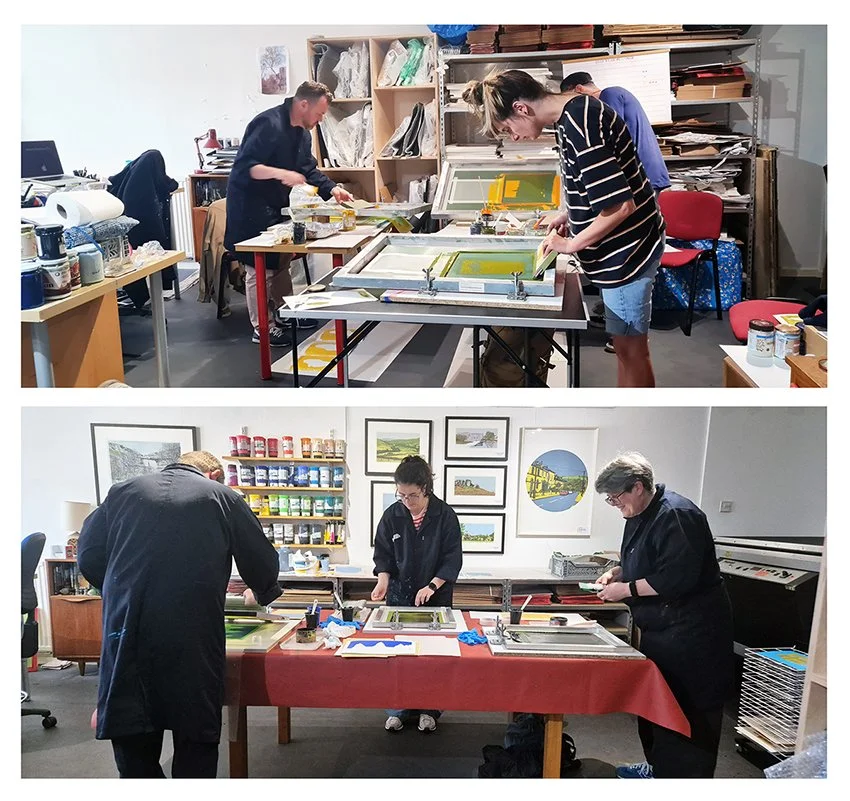
Before and after of the studio revamp
It’s so much more welcoming, and most surprisingly I feel more creative in the space. There’s still more to do and removing the storage is a problem, but it’s a much more inspiring place to work. So that’s 14 years, 3 studios with 10 years in my current space, I don’t know what happens next but it’s been nice to look back at how I started to where I am now.
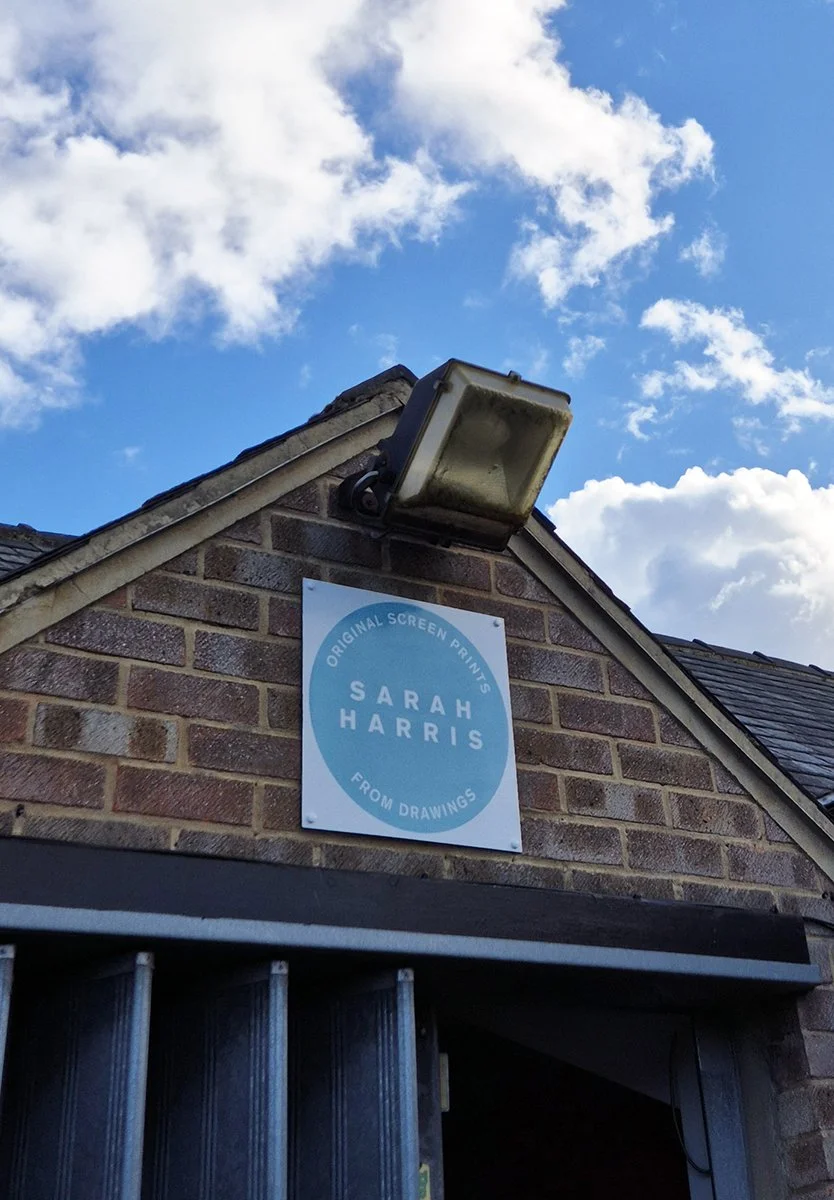
It only took almost 10 years to put up a sign